Prismatic Software Editorial Team
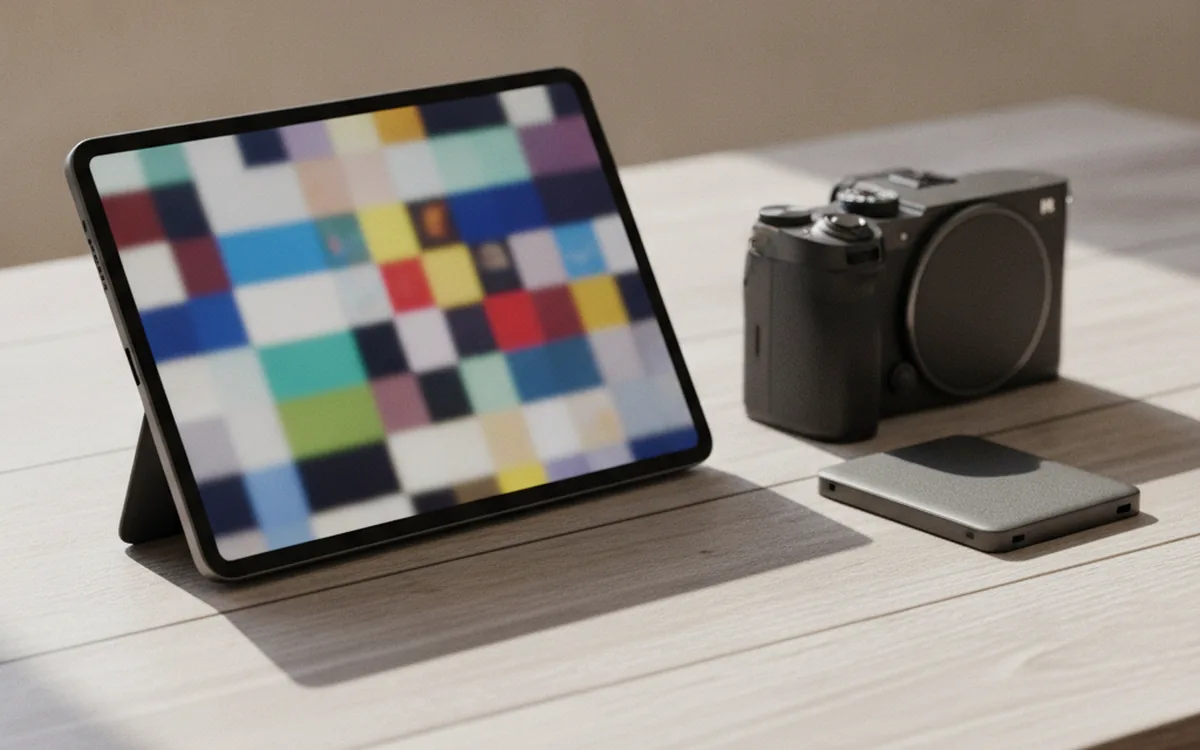
Apple's own announcement frames the new iPad mini around thinness and the move to OLED, confirming the 8.5" panel reaches 1,200 nits of peak brightness, with an optional nano-texture coating on the 256GB and 512GB models to cut glare (Apple Newsroom). The A20 Pro chip is the same silicon powering the iPhone 18 Pro and the new folding Duo, a notable jump for a device that previously lagged a generation or two behind Apple's flagship phones (9to5Mac).
A brighter, more accurate pocket screen paired with real GPU headroom is also, by definition, a device photographers will start trusting to make real decisions on — keep, reject, flag for the desktop pass — rather than just previewing shots to kill time on a train. That shift from "glance" to "decide" is exactly the kind of workflow gap an outside mobile development team like YuSMP Group's gets hired to close: a companion app that ingests camera files over USB-C, renders RAW previews fast enough to trust on a 1,200-nit panel, and syncs flags back to a desktop catalog without the photographer re-doing the sort twice.
What actually changed
The headline specs, per Apple's release: an 8.5" OLED display (up from the previous LCD panel), the A20 Pro chip, a 12MP Center Stage front camera moved to the landscape edge for video calls, IP67 dust and water resistance, and a 5.4mm-thin redesign. Pricing starts at $699, with pre-orders beginning October 28 and units shipping November 6 (Apple Newsroom). 9to5Mac's hands-on coverage confirms the panel stays at 60Hz rather than adopting the 120Hz ProMotion refresh rate found on the iPad Pro line, a deliberate cost and battery trade-off rather than an oversight (9to5Mac).
Why the display matters more than the chip
For anyone judging exposure or focus on a seven-inch-class screen, OLED's deeper blacks and higher contrast matter more than raw clock speed. A washed-out LCD panel has always been the weak link in using a small tablet for serious photo review in bright outdoor light; 1,200 nits plus the optional anti-glare coating directly targets that failure mode. The A20 Pro chip's job, meanwhile, is decoding and debayering RAW files from modern high-megapixel sensors fast enough that scrubbing through a card doesn't stutter — something earlier iPad mini chips handled adequately for JPEGs but struggled with on large RAW bursts.
Field culling still ends at a desktop
None of this replaces a desktop pass. A tablet triage step is useful for throwing out the obvious misses and flagging the best frames before a shoot even ends, but the files still need to land somewhere for real editing, duplicate detection, and delivery. That's the same handoff Prismatic's own tools sit at — once flagged files make it off whatever device reviewed them first, duplicate detection and a batch conversion pass turn a culled folder into something a client can actually open.
The bottom line
Apple didn't build the new iPad mini for photographers specifically, but a brighter OLED panel and flagship-class silicon in a pocketable body land squarely in a workflow gap that's existed for years: a screen good enough to make real culling decisions on before the files ever reach a laptop. Pre-orders open October 28, with the $699 tablet shipping November 6.