Prismatic Software Editorial Team
Microsoft introduced MAI Image 2.7 and MAI Image 2.7 Flash on November 17, putting both models into public preview on Microsoft Foundry alongside availability through partners fal, Genspark, OpenRouter, and Vercel (Microsoft AI). The full model lists at roughly $35 per 1,000 images, Flash at roughly $10, and Microsoft is pricing the pair as "one-fifth the cost" of GPT Image 2.6 Sunburst while claiming a narrow lead over it on the independent Artificial Analysis image-editing leaderboard (The Decoder).
A model landing in public preview with that kind of price gap is exactly the moment a product team has to decide whether to swap providers, run both behind a router, or build an abstraction layer so the next price war doesn't mean another rewrite. That decision point is squarely inside API development services, and it's worth getting an outside read on the integration before committing a roadmap quarter to one vendor's SDK.
What shipped on Foundry, and for how much
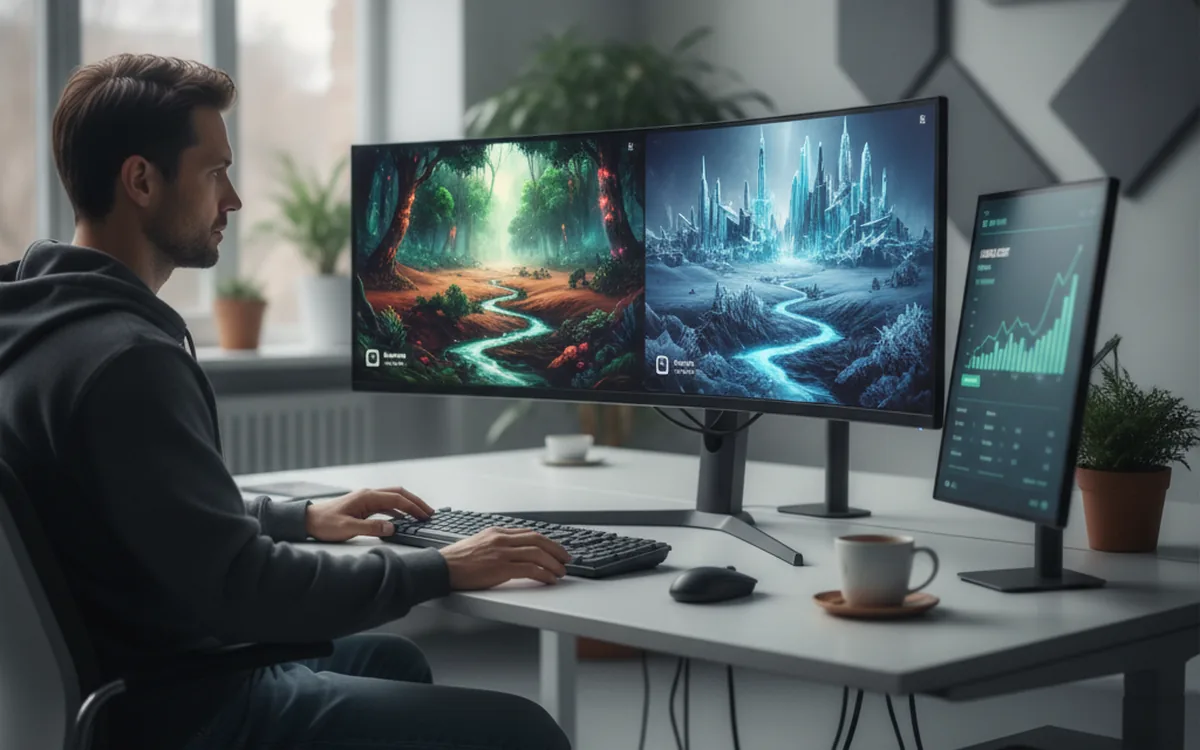
Both MAI Image 2.7 and Flash are diffusion-based models built for text-to-image generation and controllable image-to-image editing, producing images up to 2048 by 2048 pixels, supporting transparent backgrounds, and accepting as many as five reference images to steer an edit (The Decoder). Flash also powers Canvas, a new interactive workspace in MAI Labs where a user starts from a prompt or a rough sketch, then selects any region of the image to replace, move, or restyle without leaving the canvas (Microsoft AI).
The pricing is the part doing the work here. At roughly $35 per 1,000 images for the full model and $10 for Flash, both sit well below GPT Image 2.6's published rate, and Microsoft is explicit that undercutting the incumbent on cost, not just matching it on quality, is the point of shipping two tiers at once.
Topping the leaderboard without topping the price
On the Artificial Analysis image-editing leaderboard, MAI Image 2.7 scores 1,215 Elo points from 5,478 votes, four points ahead of GPT Image 2.6 Sunburst's top configuration (The Decoder). A four-point Elo gap is close enough that most users wouldn't reliably tell the outputs apart in a blind test; it's the cost side of that comparison that's the actual headline, not a quality leap. For plain text-to-image generation rather than editing, Microsoft's model ranks fourth on the same board, so the win is specifically in editing workloads: inpainting, restyling, and reference-guided edits, rather than generation from scratch.
That distinction matters for anyone benchmarking providers by a single leaderboard number. A model that leads on editing Elo but trails on generation Elo is a better fit for some workloads and a worse one for others. That nuance gets lost whenever a pricing page simply claims "best-in-class."
Where this actually lands for a product team
For a SaaS feature that calls a generative image API on a per-request basis, a provider doubling down on price at this scale changes the cost-of-goods line directly. Multiply $25 of savings per 1,000 images across a feature with real usage, and the gap between providers stops being an engineering footnote and starts showing up in the margin line. Flash's API surface is similar enough to GPT Image's that migrating an existing integration is plausible, but "plausible" and "safe to ship this sprint" are different claims once retries, content-policy differences, and output-format quirks between providers are accounted for.
That's the actual work behind a provider swap: mapping the old integration's edge cases onto the new API, deciding whether to keep a fallback path to the previous provider during rollout, and load-testing the new rate limits before a launch, not after one. Teams that treat a cheaper model as a one-line config change are usually the ones that find out about a missing edge case in production.
The bottom line
Plenty of vendors have built a competent image-editing model this year, so that's not the real news here. The real news is that Microsoft is willing to sell editing quality roughly on par with the leading incumbent at a fifth of the price, in public preview, open to anyone who wants to try it. That's a serious argument for re-pricing any product feature currently paying full rate for generative image editing, provided the integration work to get there is actually planned for, not assumed away.